
The Event Leadership Journal
The Venue Never Saves a Bad Strategy
Why extraordinary experiences begin long before contracts are signed.
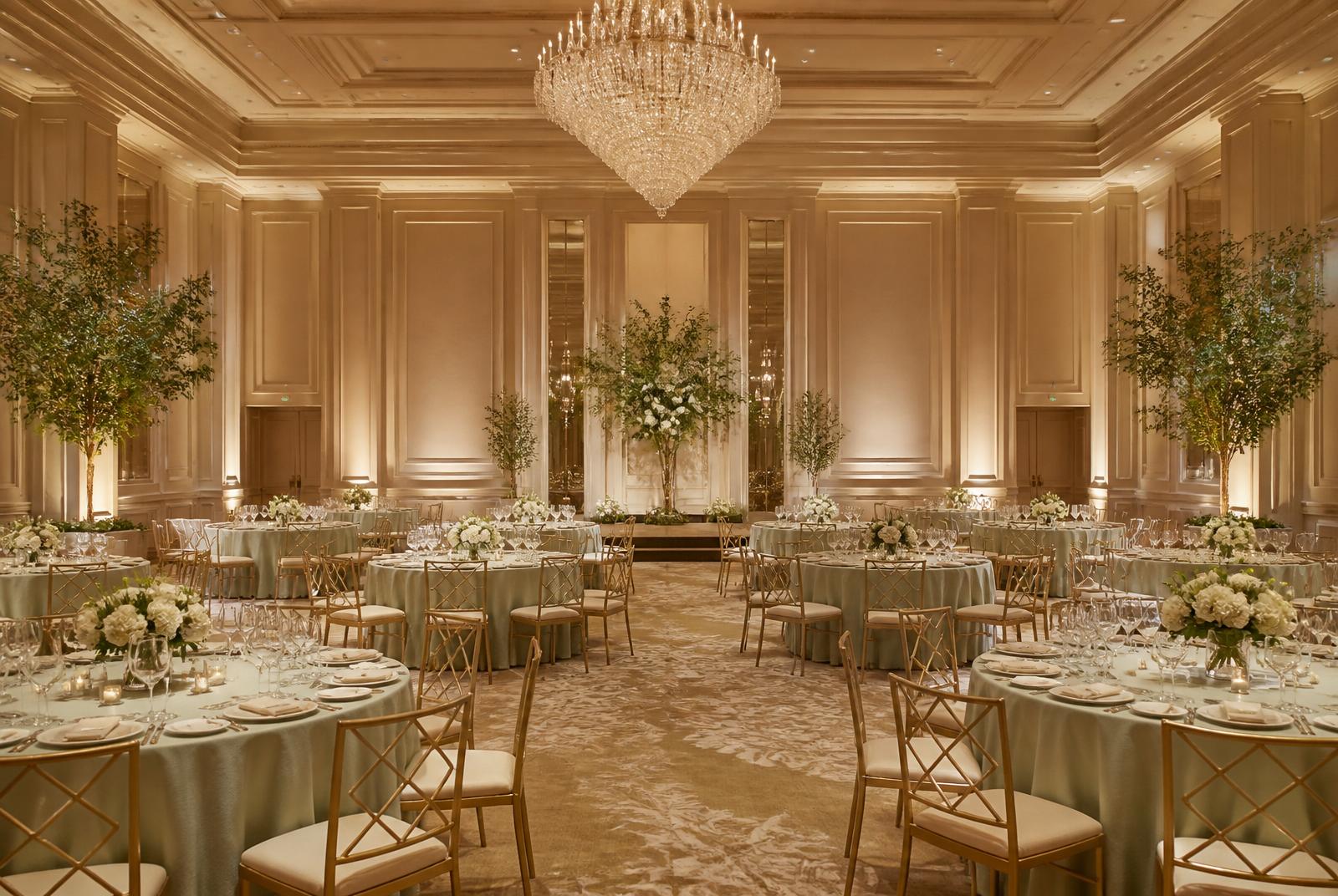
The ballroom was beautiful.
It had everything you would expect from a world-class venue. Floor-to-ceiling windows overlooked the city skyline. The lighting had been perfectly programmed. Every chair sat precisely in line. The stage was flawless. Somewhere backstage, a production crew was running through final cues while caterers prepared for hundreds of guests who would arrive within a few hours.
Standing alone in that empty room, it was easy to believe this was where the experience would begin.
It wasn't.
It had begun months earlier around a much less impressive table.
- A conference room.
- A whiteboard.
- A leadership meeting.
- A difficult conversation.
After nearly two decades leading global conferences, executive experiences, field marketing organizations, customer events, and corporate event portfolios, I've learned something that continues to surprise people.
Extraordinary events are rarely created by extraordinary execution. They're created by extraordinary decisions.
Long before a venue is selected. Long before a keynote speaker is booked. Long before registration opens.
That's why I've come to believe something that has become the foundation of how I lead - and how I advise organizations today.
The venue never saves a bad strategy. It never has. It never will.
We've Been Starting in the Wrong Place
Walk into almost any event planning meeting and you'll hear the same questions.
- "Have we selected the venue?"
- "What's the budget?"
- "Who's speaking?"
- "How many attendees are we expecting?"
- "When should registration open?"
They're all important questions. They're just not the first questions.
Somewhere along the way, our industry became incredibly good at planning events. But planning isn't leadership. Planning is execution. Leadership is deciding whether the event deserves to exist in the first place.
That distinction sounds subtle. In practice, it changes everything. Because once you've decided to host an event, every conversation that follows is focused on how. Very few organizations stop long enough to ask why. And that's often where the real problems begin.
I've watched organizations spend months evaluating convention centers before agreeing on the business objective. I've seen executive teams debate menus longer than they debated customer outcomes. I've watched keynote speakers confirmed before anyone could clearly explain what attendees should do differently after the event.
Everyone involved was talented. Everyone worked incredibly hard. They simply started in the wrong place.
The Meeting That Changed My Thinking
Years ago, I was leading planning for what had traditionally been one of our company's largest global internal events. The early meetings looked exactly like every other major event I'd ever planned - convention centers, hotel room blocks, travel budgets, production schedules, shipping timelines.
Eventually someone asked what seemed like the obvious question. "How do we get everyone to Denver?"
The room immediately started solving it. More hotel rooms. More flights. Larger meeting space. Bigger production. The conversation gained momentum. The only problem was that we were solving the wrong problem.
Our workforce had become increasingly global. Travel costs were climbing. Visa restrictions meant many employees couldn't attend. Time zones made participation difficult. Some offices simply didn't have the budget to send large teams across the world.
If our goal was to bring our global workforce together - why were we measuring success by how many people we could fly to one city?
The better question wasn't "How do we get everyone to Denver?" It was "How do we create one meaningful experience for employees around the world?"
Everything changed after that. Denver became our flagship event. Around the world, regional offices hosted professionally produced watch parties featuring live-streamed keynotes, executive updates, and company announcements - each region adding its own local programming, networking, leadership discussions, and celebrations designed specifically for its people.
On paper, the logistics became more complicated. Strategically, everything became simpler. More employees participated. Accessibility improved dramatically. Regional leadership became more engaged because they weren't simply watching the event - they were helping lead it.
People often describe that event as a successful hybrid conference. I don't. I describe it as a successful leadership decision. Technology wasn't the innovation. The question was. Technology should enable strategy. It should never become the strategy.
Planning Is Visible. Leadership Is Invisible.
One of the reasons organizations struggle with strategy is because execution receives all the attention. Attendees notice the keynote. They notice the stage. They compliment the venue. They remember the networking reception. They never see the months of difficult conversations that made those moments possible.
No attendee has ever walked up to me and said, "Your stakeholder alignment was exceptional." No one has complimented a business objective. Or executive buy-in. Or cross-functional planning.
Leadership is invisible. Execution is visible. Yet it's the invisible work that determines almost everything.
Will Sales and Marketing define success the same way? Will executives support the investment next year? Will Customer Success leave believing the event strengthened relationships? Will Product feel represented? Will every decision reinforce one clear business objective?
Those questions are answered months before anyone walks into the ballroom. That's leadership. And leadership - not logistics - is what ultimately determines whether an event creates business impact.
Beautiful Events Can Still Fail
One of the biggest misconceptions in our profession is that unsuccessful events are easy to recognize. They're not. Some of the most strategically unsuccessful events I've ever seen were absolutely beautiful.
The production was flawless. The keynote received a standing ovation. The networking reception was packed. Attendees loved the venue. Survey scores were outstanding. Social media was filled with smiling faces. From the outside, they looked like tremendous successes.
Inside the executive boardroom, different questions were being asked. Did this strengthen customer relationships? Did it accelerate strategic accounts? Did it influence executive buyers? Did it support the company's priorities? Was it the best investment we could have made?
Those are leadership questions. And they have very little to do with the ballroom. Organizations don't invest millions of dollars to create events. They invest millions of dollars to create business outcomes. The event is simply the vehicle.
When we confuse the vehicle with the destination, we begin optimizing the wrong things. We celebrate attendance instead of influence. Activity instead of outcomes. Execution instead of leadership. And eventually we wonder why beautifully executed events fail to move the business forward. The answer isn't better production. It's better questions.
The Most Expensive Mistake Never Appears on the Budget
When people ask me where organizations waste the most money in events, they usually expect me to talk about hotel contracts, production, food and beverage, or last-minute changes. Those things matter. I've negotiated enough multimillion-dollar contracts to know they do.
But the most expensive mistake I've ever seen doesn't appear on a budget spreadsheet. It's investing months of time, energy, and millions of dollars into an event that was never strategically necessary in the first place.
Think about how many events continue simply because they've always existed. The annual customer conference. The regional roadshow. The executive retreat. The sales kickoff. The user summit. No one remembers who originally proposed them. They've simply become part of the company's operating rhythm.
Tradition isn't a strategy. It's history.
The strongest leaders I've worked with never assume an event deserves another year on the calendar. They ask it to earn its place. One of my favorite questions to ask executive teams is deceptively simple: "If this event didn't already exist, would we create it today?"
Not five years ago. Not before the market changed. Not before customer expectations evolved. Today. Knowing everything you know now about your customers, your company, your budget, your business priorities, and your market - would this still be the best investment?
Sometimes the answer is yes. Sometimes it's no. More often than not, the answer is, "Yes...but not like this." And that's where transformation begins. Not with a new venue. Not with a larger budget. With permission to rethink the problem.
Event Planning and Event Leadership Are Different Jobs
Early in my career, I believed my job was to execute exceptional events. If registration opened on time. If speakers were happy. If the agenda ran smoothly. If attendees had a great experience. Then I had succeeded.
Those things still matter. But they aren't why organizations invest in experiences. As my career progressed, I found myself spending more time in executive meetings than production meetings. The conversations were completely different.
No one asked whether attendees enjoyed lunch. They asked whether customers left with greater confidence. Whether strategic relationships became stronger. Whether the event accelerated pipeline. Whether employees were more aligned. Whether executives believed the investment created measurable business value.
My job wasn't to produce events. My job was to help the business create outcomes through experiences.
Planning asks, "How do we execute this event?" Leadership asks, "Why does this event deserve to exist?" Planning asks, "Which venue should we choose?" Leadership asks, "What business objective should determine every decision that follows?" Planning asks, "How many people attended?" Leadership asks, "What changed because they attended?"
One focuses on logistics. The other focuses on transformation. Great organizations need both. But only one should lead the conversation.
The Best Leaders Slow the Meeting Down
One of the greatest leadership lessons I've learned is that progress doesn't always look like movement. Sometimes progress looks like stopping the meeting. Asking one uncomfortable question. And sitting in silence while people think.
I've learned not to fear those moments. In fact, I've come to appreciate them. Because silence usually means people are considering a question they haven't been asked before.
- "Who is this event really for?"
- "What happens if we don't host it?"
- "What business problem are we solving?"
- "Would we make this same decision if we were starting from scratch?"
Those aren't planning questions. They're leadership questions. They don't produce timelines. They produce clarity. And clarity has an extraordinary way of simplifying everything that follows.
I've watched weeks of debate disappear because a leadership team finally aligned on one objective. I've watched budgets become easier to defend because everyone understood the business outcome. I've watched agendas become dramatically stronger because the audience was finally defined.
People often think strategy makes planning slower. I've found the opposite. Great strategy accelerates planning because it eliminates uncertainty. Every decision suddenly has a filter. Does this support the outcome we're trying to create? If yes, move forward. If not, don't. Simple. Not always easy. But remarkably simple.
The Venue Was Never the Hero
I love extraordinary venues. I appreciate exceptional hospitality. I believe destination strategy matters enormously. The right city can influence attendance. The right hotel can improve networking. The right venue can shape how people experience your brand. I'll probably spend the rest of my career helping organizations make better destination decisions.
But I've never confused the venue with the strategy. The venue is the setting. Not the story. It's the stage. Not the performance. It's where transformation happens. It is not what creates transformation.
I've seen unforgettable experiences happen inside modest meeting rooms. I've also seen seven-figure conferences inside breathtaking venues accomplish very little. The difference was never the building. It was the leadership. The questions leaders asked. The decisions they made. The clarity they created. The alignment they built.
Everything attendees eventually experienced began months earlier in conversations they will never see. That's the invisible work of leadership. And in my experience, it's the work that matters most.
The S.A.S. Framework Wasn't Created. It Was Discovered.
People often ask where the S.A.S. Framework came from. They usually expect a story about a strategic planning session or a consulting exercise. The truth is much less glamorous. I didn't create it. I discovered it.
Over nearly twenty years, after every conference, executive forum, customer event, and field marketing program, I found myself asking the same question. Why did this one work? Not why attendees liked it. Not why survey scores were high. Why did it actually create business impact?
Why did one event accelerate relationships, influence decisions, and move the business forward while another - with a similar budget, similar team, and similar production - fell flat?
They started with Strategy. They created Alignment. Then they built systems that allowed excellence to Scale.
Everything else was execution. That's when I realized I wasn't observing best practices. I was observing a leadership model. And that leadership model eventually became the S.A.S. Framework - not another planning methodology, but a way of thinking.
Strategy
Strategy is answering one question before anyone opens a project plan. Why does this experience deserve to exist? Not because it's on the calendar. Not because competitors host one. Not because "we've always done it." Because it solves a meaningful business problem.
Everything begins there. Without strategy, every decision becomes a debate. With strategy, every decision becomes a choice. The destination. The agenda. The speakers. The audience. The investment. They all become easier because they are being evaluated against a clearly defined purpose.
Strategy doesn't give you all the answers. It tells you which questions matter.
Alignment
If strategy defines the destination, alignment gets everyone walking in the same direction. I've never seen an event fail because people didn't care. I've seen events struggle because everyone cared about something different.
Marketing wanted awareness. Sales wanted pipeline. Customer Success wanted retention. Product wanted adoption. Finance wanted efficiency. Leadership wanted customer trust. Every one of those goals was valid. None of them were wrong. But no one had decided which objective mattered most.
Alignment isn't about eliminating different perspectives. It's about creating one shared definition of success. When that happens, planning becomes dramatically easier. Meetings become shorter. Decisions become faster. Budgets become easier to defend. Creative ideas become easier to evaluate. Because everyone is solving the same problem - not different versions of it.
One of the simplest exercises I use with executive teams is asking every stakeholder to privately answer one question: "How will we know this event was successful?" Then we compare answers. Almost every time, they're different. That's not failure. That's clarity. Because until those differences are visible, they can't be resolved.
Scale
People often assume scale means doing more. More events. More attendees. More cities. More technology. I've never believed that. To me, scale means creating systems that allow excellence to become repeatable.
The best event organizations don't reinvent themselves every year. They capture lessons. Document decisions. Build playbooks. Create planning rhythms. Develop measurement frameworks. Use AI to automate repetitive work. Standardize what should be repeatable so their teams have more time for what should remain creative.
Ironically, the organizations that appear most innovative are often the most operationally disciplined. Structure doesn't eliminate creativity. It protects it.
When routine work becomes easier, people finally have time to think. And thinking is still the most valuable work we do.
This Is Bigger Than Events
Sometimes people ask why I care so deeply about strategy. The answer has very little to do with events. I've always believed events are one of the clearest reflections of organizational leadership.
An event reveals priorities. Culture. Decision-making. Alignment. Trust. It reveals whether leaders truly understand their customers. Whether departments collaborate. Whether strategy actually exists beyond a PowerPoint presentation. In many ways, an event is leadership made visible.
That's why I believe our profession has evolved. We're no longer event planners. We're business leaders who happen to create experiences. The logistics matter. The hospitality matters. The production matters. But those things support the experience. They are not the experience. The experience is created by every decision that came before it. And every one of those decisions begins with leadership.
One Final Thought
Long before attendees arrive. Before the badges are printed. Before the keynote begins. Before the lights dim. Someone walks into an empty ballroom. The chairs are perfectly aligned. The stage is ready. The screens glow softly in the background. For a brief moment, the room is completely still.
It's tempting to believe this is where the event begins. It isn't. It began months earlier. Around another table. In another room. Where leaders asked difficult questions. Where assumptions were challenged. Where priorities were debated. Where someone had the courage to ask, "Are we solving the right problem?"
That's where extraordinary experiences are created. The ballroom simply gives those decisions a place to come to life. That's why, after nearly twenty years in this profession, I remain convinced of one simple truth.
The venue never saves a bad strategy. It never has. It never will.
Reflection
Before your next planning meeting, ask yourself:
- Are we discussing logistics before we've agreed on strategy?
- What business problem deserves this investment?
- Have we aligned on one definition of success?
- Are we designing an event - or creating a business outcome?
- If this event didn't exist today, would we build it again?
The answers won't just shape your next event. They'll shape the kind of leader you become.
Continue the Conversation
This article is the foundation of my philosophy on executive event leadership. In future Insights, we'll explore destination strategy, executive experiences, field marketing, AI, and the leadership decisions that transform events from projects into business catalysts.
Because extraordinary experiences aren't remembered because of where they happened. They're remembered because of why they mattered.
Continue Reading
More from The Event Leadership Journal.
Honest reflections on the strategy, people, and decisions behind extraordinary events.