Inside the S.A.S. Framework
Why ROI Is the Wrong Conversation
Moving beyond proving value after the event to designing business outcomes before it begins.
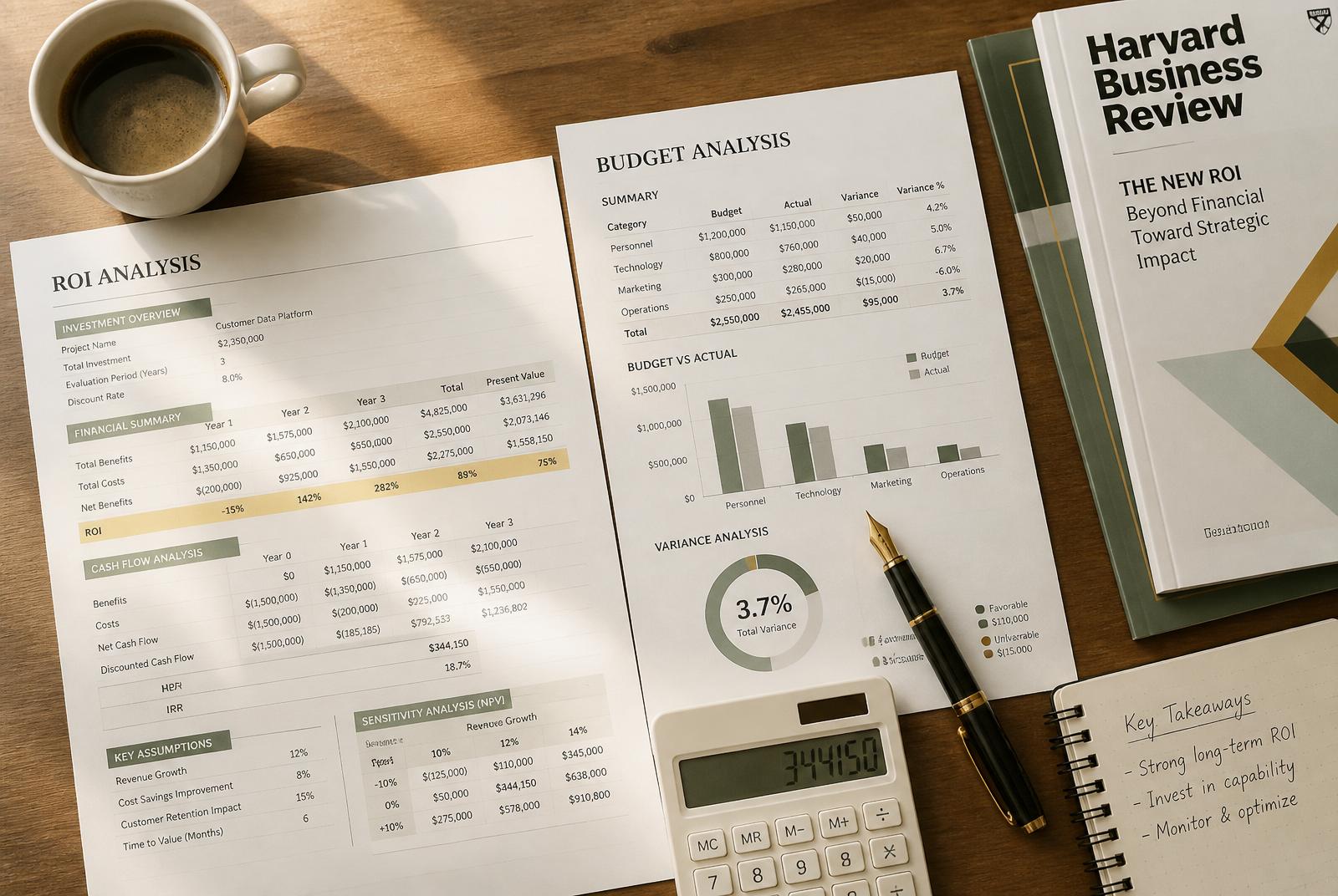
Few topics generate more anxiety among event professionals than three simple letters. ROI. Return on investment.
Every year, countless teams are asked the same questions. "What was the ROI?" "Did the event pay for itself?" "Can you prove it worked?" They're reasonable questions. They're also incomplete.
After nearly two decades leading global conferences, executive forums, field marketing organizations, and multimillion-dollar event portfolios, I've come to believe that many organizations are having the wrong conversation. Not because ROI doesn't matter. It absolutely does. But because we usually ask about ROI far too late.
We ask after registration closes. After attendees fly home. After surveys are completed. After budgets are reconciled. In other words, after every meaningful decision has already been made. At that point, we're no longer designing business outcomes. We're defending investments.
The strongest event organizations don't spend all of their energy proving value after an event. They spend far more time intentionally creating value before it begins.
We Measure What We Can Easily Count
Most event reports look remarkably similar. Registrations. Attendance. Badge scans. Meeting counts. Survey scores. Session attendance. Net Promoter Score. Cost per attendee. Social impressions. Website traffic.
Those metrics are useful. I use many of them myself. But they're rarely the outcomes executives actually care about. No CEO has ever told me, "I hope this conference generates a fantastic badge scan report." They care about different questions.
- Did we strengthen customer relationships?
- Did we accelerate strategic opportunities?
- Did we position the company differently?
- Did executives spend meaningful time with customers?
- Did we increase customer confidence?
- Did we create advocates?
- Did we support long-term growth?
Those outcomes are harder to measure. They're also much more valuable.
An Event Isn't a Product
One reason ROI becomes complicated is because organizations often evaluate events as though they're standalone products. Host conference. Generate revenue. Measure profit. Done. Very few events actually work that way.
Imagine evaluating your sales organization based only on one customer meeting. Or your content strategy based on one blog article. Or your marketing department based on one email campaign. It wouldn't make sense. Business growth happens through cumulative experiences. Events are one of those experiences.
A flagship conference may influence relationships that close six months later. An executive dinner might strengthen trust that eventually leads to renewal. A customer advisory board may shape a product roadmap that creates entirely new revenue opportunities.
Those outcomes don't fit neatly into a post-event report. But they're often where the greatest value exists.
The Wrong KPI Creates the Wrong Behavior
One of the fastest ways to undermine strategic events is measuring them against inappropriate metrics. If every event is expected to maximize registrations, teams optimize for attendance. If every event is judged by lead volume, teams prioritize quantity over quality. If every investment is measured solely by short-term pipeline, long-term relationship building becomes difficult to justify.
Metrics shape behavior. Behavior shapes strategy. That's why defining success before planning begins is so important. Different events should accomplish different objectives.
An executive forum isn't trying to generate thousands of leads. A customer advisory board shouldn't be judged against a trade show. A leadership retreat isn't competing with a user conference. Every experience deserves metrics aligned with its purpose.
Otherwise, teams begin optimizing for numbers instead of outcomes.
The Most Valuable Things Are Often the Hardest to Measure
Some of the most important moments I've experienced throughout my career never appeared in a dashboard.
- A customer telling an executive, "This conversation changed how we think about our partnership."
- A speaker introducing two attendees who later built a business relationship.
- An executive hearing unfiltered customer feedback for the first time.
- A regional sales leader strengthening trust with a strategic account.
- An attendee deciding to join a customer community because they finally felt connected.
Those moments rarely generate immediate revenue. Yet they frequently influence future business in meaningful ways.
Just because something is difficult to quantify doesn't mean it lacks value. Some of the strongest business outcomes begin with conversations that cannot be measured in real time.
ROI Begins During Strategy
Whenever someone asks me how to improve event ROI, my first response surprises them. I rarely start with measurement. I start with strategy.
Why does this event exist? Who is it designed for? What business problem are we solving? How should customer behavior change afterward? How will executives define success? What decisions are we hoping to influence?
ROI is created through intentional design - not retrospective reporting. If the strategy is weak, measurement becomes almost impossible. If the strategy is clear, appropriate metrics become much easier to define.
Executive Reporting Should Look Different
One lesson I've learned over time is that executives rarely need longer reports. They need better insights. Instead of presenting thirty pages of operational metrics, imagine leading with five questions.
- What business objective did this event support?
- What meaningful outcomes occurred?
- What surprised us?
- What should we do differently next year?
- What decisions do we recommend?
That's an executive conversation. Attendance numbers still matter. Budget performance still matters. Operational excellence still matters. They simply become supporting information instead of the headline.
My Own Reporting Has Changed
Early in my career, I proudly built detailed post-event reports. Attendance. Food and beverage. Registration trends. Survey results. Budget reconciliation. Everything was there.
Then I noticed something. Executives rarely spent much time discussing those reports. They wanted to talk about customers. Sales conversations. Executive meetings. Partnerships. Business opportunities. That's when I realized I had been reporting the event. Not the business impact.
Since then, I've approached reporting differently. Metrics still matter. But they support a broader story. One that explains why the investment mattered - not simply how the event operated.
The Conversation Should Start Earlier
Imagine if organizations asked these questions before approving every event.
- What business outcome are we expecting?
- How will customer behavior change?
- Which executives need to participate?
- What relationships should be strengthened?
- What would success look like one year from now?
- How does this investment support our strategy?
Those conversations dramatically improve decision-making. Because once success is clearly defined, planning becomes much more intentional. Every agenda session. Every invitation. Every networking opportunity. Every investment. Every budget decision.
They all become easier because the destination is already clear.
This Is Why Strategy Comes First
This idea sits at the heart of the S.A.S. Framework. Strategy defines success before execution begins. Alignment ensures every stakeholder understands what success actually means. Scale creates repeatable systems for measuring and improving those outcomes over time.
Notice what's missing. The framework doesn't begin with reporting. Because measurement is the result of good strategy. Not the substitute for it.
Stop Asking What the ROI Was
Here's a different question I'd encourage organizations to ask. Instead of asking, "What was the ROI?" ask, "What business outcome were we intentionally trying to create - and did we create it?"
That subtle shift changes everything. It moves the conversation away from defending budgets. Toward designing better investments. Away from activity. Toward impact. Away from proving value after the fact. Toward creating value from the very beginning.
Extraordinary events don't become successful when someone builds a better dashboard. They become successful when leaders intentionally design experiences that strengthen relationships, influence decisions, and move the business forward.
At that point, ROI is no longer something you're trying to prove. It's simply the natural outcome of a strategy that was worth investing in from the start.
Continue Reading
More from Inside the S.A.S. Framework.
Honest reflections on the strategy, people, and decisions behind extraordinary events.